



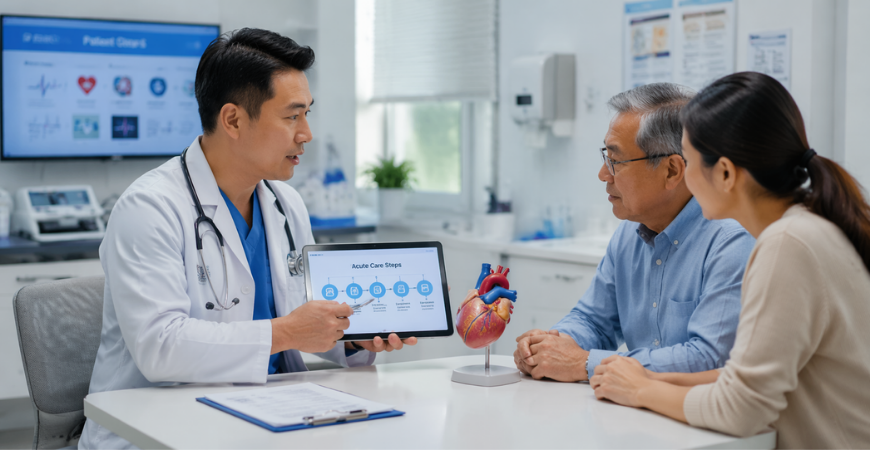
Acute Care Education
In the high-stakes environment of acute care, knowledge alone is not enough—precision, speed, and confidence define outcomes. Acute Care Education is more than a training module; it is a transformative experience that prepares healthcare professionals to think critically, act decisively, and save lives under pressure.
Led by the expertise of Dr. Kushal Narula, an Emergency Physician and Assistant Professor, this service is designed to bridge the gap between theoretical understanding and real-world clinical execution. With a focus on updated medical practices, evidence-based learning, and hands-on application, Acute Care Education equips learners to excel in the most demanding healthcare settings.
Why Acute Care Education Matters Today
Modern medicine is evolving rapidly. New diseases emerge, treatment protocols are continuously updated, and patient expectations are higher than ever. In emergency and acute care settings, delayed decisions or outdated practices can have serious consequences.
Acute Care Education ensures that:
- Healthcare professionals stay updated with the latest clinical guidelines
- Critical thinking is sharpened in time-sensitive scenarios
- Decision-making becomes faster, accurate, and evidence-based
- Patient outcomes improve through structured and confident intervention
Dr. Kushal Narula emphasizes that “the difference between knowing and doing is where lives are often lost or saved.”
Designed for Real-World Impact
Unlike traditional learning methods, this program is built around practical exposure. It focuses on what truly happens inside emergency rooms, ICUs, and trauma centers—not just what is written in textbooks.
Simulation-Based Learning
Participants engage in realistic clinical simulations that replicate emergency scenarios such as cardiac arrest, trauma resuscitation, shock management, and airway emergencies. This immersive approach builds muscle memory and prepares learners for high-pressure situations.
Case-Based Discussions
Real patient cases are analyzed to develop clinical reasoning skills. Learners are encouraged to think beyond symptoms and understand the underlying pathology, ensuring a deeper and more practical understanding.
Rapid Response Training
Time is critical in acute care. This module trains participants to recognize early warning signs, prioritize interventions, and execute life-saving procedures efficiently.
Key Areas of Expertise
Acute Care Education by Dr. Kushal Narula covers a wide spectrum of emergency and critical care topics, ensuring comprehensive skill development.
Emergency Resuscitation Skills
Mastering CPR, advanced cardiac life support (ACLS), and basic life support (BLS) techniques with precision and confidence.
Trauma and Injury Management
Understanding the principles of trauma care, including airway stabilization, hemorrhage control, and fracture management.
Acute Medical Emergencies
Managing conditions such as heart attacks, strokes, severe infections, respiratory distress, and metabolic crises with updated protocols.
Pediatric and Geriatric Emergencies
Specialized approaches to handling vulnerable populations with unique clinical needs.
Clinical Decision-Making Under Pressure
Developing the ability to make quick, accurate decisions even in uncertain and high-stress situations.
Bridging the Gap Between Theory and Practice
One of the biggest challenges in medical education is translating theoretical knowledge into clinical action. Acute Care Education addresses this gap by integrating:
- Evidence-based guidelines with hands-on training
- Classroom learning with bedside application
- Academic knowledge with real-time clinical judgment
As an Assistant Professor, Dr. Kushal Narula brings a unique blend of academic excellence and frontline emergency experience. This ensures that the content is not only scientifically accurate but also practically relevant.
Who Can Benefit?
This service is ideal for:
- Medical students seeking practical exposure
- Interns and residents preparing for emergency responsibilities
- Nursing professionals aiming to enhance critical care skills
- Practicing doctors looking to update their knowledge and techniques
Whether you are at the beginning of your medical journey or advancing your career, Acute Care Education provides the tools to excel.
A Modern Approach to Learning
The program incorporates innovative teaching methods to enhance engagement and retention.
Interactive Learning Modules
Dynamic sessions that encourage participation, discussion, and critical thinking rather than passive listening.
Skill-Based Workshops
Hands-on training sessions that focus on procedures, equipment handling, and emergency protocols.
Continuous Assessment and Feedback
Regular evaluations help learners identify strengths and areas for improvement, ensuring consistent growth.
The Role of Awareness in Acute Care
Awareness is the foundation of effective acute care. Recognizing early symptoms, understanding risk factors, and anticipating complications are essential skills that this program emphasizes.
Dr. Kushal Narula believes that “awareness transforms hesitation into action.” By training healthcare professionals to identify subtle clinical changes, Acute Care Education enhances early intervention and prevents deterioration.
Beyond Training: Building Leaders in Emergency Care
This is not just about learning skills—it is about shaping confident, competent, and compassionate healthcare providers. Participants are trained to:
- Lead emergency teams effectively
- Communicate clearly in high-pressure situations
- Maintain composure and professionalism
- Deliver patient-centered care
These qualities are essential for anyone working in acute and emergency settings.